Why Technology + Coaching Creates an Unfair Advantage for Real Estate Teams
There are two camps in real estate, and most agents live in one or the other. The technology camp believes the right CRM, the right funnel, and the right automation will solve the business. The coaching camp believes mindset, scripts, and accountability will solve the business. Both camps are half right. And both are quietly losing to the agents who've figured out that the real answer is both.
Why technology alone doesn't win
Every agent has seen this movie. Shiny new CRM, big promise, three months of enthusiasm, then the platform sits unused. The problem isn't the technology. It's adoption. A CRM the agent doesn't actually use is worth zero — and most CRMs achieve exactly that.
Technology without behavior change is just software.
Why coaching alone doesn't win either
On the other side, you have agents paying $750-$1,250 a month for coaching — Mike Ferry, Tom Ferry, Ninja, Buffini — and doing maybe 40% of what the coach tells them. Not because the coaching is wrong. The coaching is excellent. The problem is translation. The coach says "implement a consistent follow-up system with your sphere." The agent nods, writes it on a sticky note, and goes back to trying to remember who they were supposed to call today.
Coaching without infrastructure is just theory.
The combination is the advantage
Here's what happens when the two work together. The coach says, "call 20 sphere contacts this week." The system already pulled those 20 contacts, tagged them, scored them, and put them on today's list with conversation history attached. The agent opens the platform, makes the calls, and the results — notes, next steps, follow-up tasks — get logged automatically. The coach sees the data on Monday. Accountability is built in. Behavior is reinforced. The system and the coaching become the same thing.
That's an unfair advantage — because most of the industry is running one or the other, not both.
What "both" actually looks like
- A pipeline already built around Ninja Selling or Mike Ferry methodology
- Daily call lists pre-populated with the right contacts at the right time
- Scripts and templates living inside the CRM — not in a binder on a shelf
- Automated follow-up running in the background so the agent's personal calls are always warm
- A dashboard the coach can see, showing activity, conversion, and pipeline health
- Weekly coaching calls where the conversation is "here's what the data shows" instead of "did you do your activities?"
You stop guessing. You stop hoping. You run on a system that coaches built and technology runs.
Why teams benefit most
Solo agents can white-knuckle their way to consistency for a while. Teams can't. The moment you have three, five, ten agents, the variation in behavior kills the business. One agent crushes prospecting. One never picks up the phone. One enters every lead. One hasn't opened the CRM in a month.
Coaching alone can't solve that at scale — the team leader can't be on every call. Technology alone can't solve it either — dashboards without accountability are just reports nobody reads.
Together, they standardize performance. The system enforces the behavior. The coaching reinforces the mindset. The team leader gets visibility without micromanaging. And agents who were inconsistent become predictable.
The economics
Coaching: $750-$1,250/month per agent. Often more for 1-on-1.
Tech stack: another $300-$800/month across CRM, dialer, email, SMS, funnels, website.
Time to integrate all of it: months, if it ever happens at all.
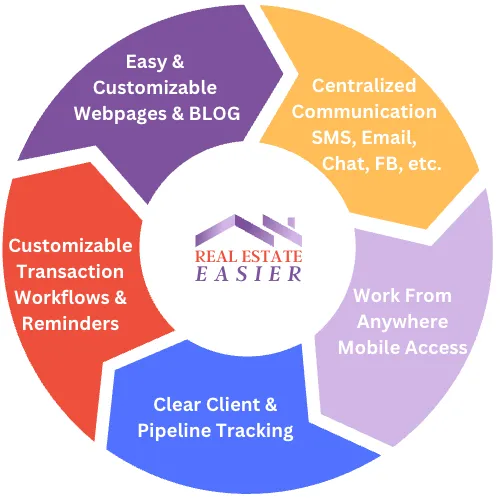
Or: one platform that's already integrated, built on proven coaching methodologies, with coaching included to make sure the system gets used. Lower total cost. Higher adoption. Measurable accountability.
The bottom line
The industry is split into agents who think tech will save them, agents who think coaching will save them, and the small minority who've figured out that neither one saves anyone on its own. The unfair advantage is building a business where the software executes what the coaching teaches — and the coaching reinforces what the software tracks.
That's how teams stop relying on individual heroics and start compounding. That's how solo agents build a business that survives when the market shifts. That's the combination that wins.
Technology alone is a tool. Coaching alone is theory. Together, they're a business.
