
Why Follow-Up Is Your Biggest Revenue Leak
You already know where most of your deals come from. It's not Zillow. It's not the billboard. It's not the last portal lead you paid $65 for. It's follow-up. And every agent I talk to nods at that sentence — then goes right back to chasing new leads the next morning.
Here's the uncomfortable truth: most agents don't have a lead problem. They have a follow-up failure problem. And that failure is quietly draining tens of thousands of dollars out of the business every year.
The math nobody wants to do
Take an agent doing $5M-$10M in volume — call it 12 closings a year. Now look at the database. It's usually somewhere between 400 and 2,000 contacts: past clients, sphere, internet leads, open house sign-ins, referrals, expireds, and the warm-ish people who said "maybe next spring" back in 2023.
Industry data is consistent: roughly 70% of buyers and sellers use the first agent they have a meaningful conversation with. Not the best one. The first one. Meaning the agent who followed up — not necessarily the agent who captured the lead.
If you have 1,000 people in your database and you're only staying in front of 50 of them in a given month, you're not running a business. You're running a 5% coverage rate. The other 95% will hire someone else and you'll never know it happened.
Why follow-up breaks down (and it's not laziness)
Agents are relationship people. They are not process people. When a deal goes under contract, the follow-up system — whatever version of it exists — falls apart. Calls get missed. The 30-day-out reminder never gets set. The "circle back in 6 months" note lives on a sticky note that got thrown away.
It's not because the agent doesn't care. It's because the system depends on the agent remembering. And the agent is already doing 14 other things.
The three places follow-up leaks out
- The new-lead window. A lead comes in. You text back in 4 hours instead of 4 minutes. Statistically, your conversion rate just dropped by more than half.
- The mid-funnel drift. A buyer isn't ready for another 90 days. Without automated touches, they go cold. When they reactivate, they'll Google and pick whoever comes up — which is often not you.
- The past-client black hole. You closed them. You moved on. Two years later they refer their sister to another agent because that agent actually stayed in touch.
Each one of those leaks is a closing you could have had. Multiply by 12 months. That's the real cost.
What actually fixes it
You don't fix a follow-up problem with willpower. You fix it with a system that runs whether you remember it or not. That means:
- Automated speed-to-lead on every new inquiry (text + email + task in under 5 minutes)
- A defined touch cadence for every pipeline stage — not "I'll get to it"
- Long-term nurture for database and past clients that runs for 12+ months without you managing it
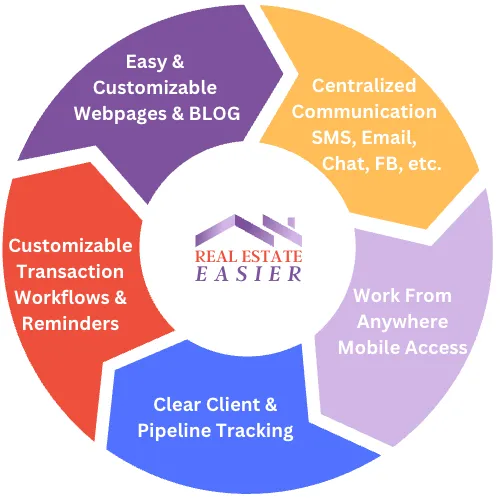
- A single source of truth where every contact lives, gets tagged, and gets assigned the right workflow automatically
The coaching world — Mike Ferry, Ninja Selling, Tom Ferry — has been saying this for 30 years. The strategy isn't the problem. The execution is.
The bottom line
Stop thinking about your follow-up problem as a discipline problem. It isn't. It's an infrastructure problem. Agents who solve it don't work harder — they work on top of a system that's already working for them.
And when you fix it, you stop buying new leads to replace the ones you lost. That's not a marketing upgrade. That's a margin upgrade.
If you're losing sleep over where the next deal comes from, audit your follow-up before you audit your lead sources. The deal is almost always already in your database. It just needs someone — or something — to actually reach out.
All Your Real Estate Tools And Systems In One Place


© 2026 Real Estate Easier LLC - All Rights Reserved.