
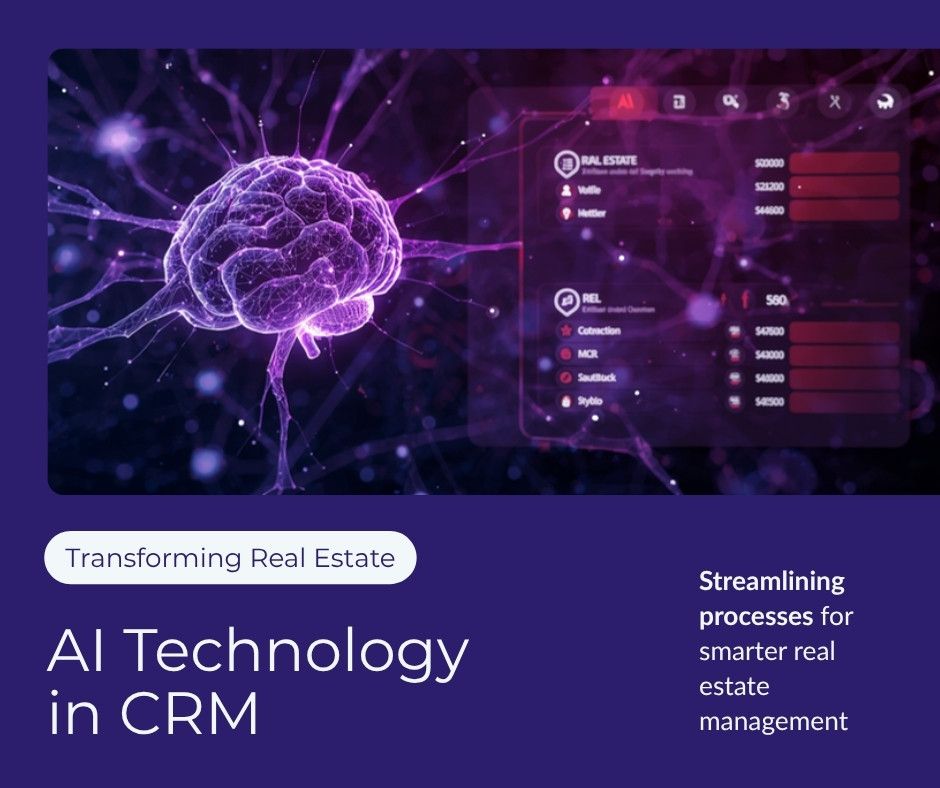
How AI Is Transforming Real Estate CRMs
Two years ago, a real estate CRM was essentially a digital Rolodex with some contact notes and a task list. Today, the best platforms have fundamentally changed what a CRM can do. AI is not a feature being added to real estate software. It is reshaping what the software itself is capable of doing.
For agents and teams, that shift is not theoretical. It is showing up in day-to-day workflows right now.
What AI Actually Does Inside a CRM
The term "AI" gets used loosely in real estate software marketing. So it is worth being specific about the capabilities that are actually moving the needle for working agents.
Automated follow-up that sounds like you. Traditional automated follow-up was a mass email sequence that everyone in your CRM received the same way. AI-powered follow-up is different. It adapts to the contact's behavior: whether they opened an email, clicked a link, visited a property page, or went silent after an active stretch. The message that goes out is contextual, not generic. And when built with customizable AI, it matches your voice and your market language, not a template that sounds like it could have come from any agent in the country.
Lead scoring and prioritization. One of the biggest time-wasters in a traditional CRM is trying to figure out who to call first. Lead scoring powered by AI removes the guesswork. It analyzes engagement signals, activity patterns, and behavioral cues to surface the contacts who are getting more active, not just the ones who registered most recently. An agent opening their CRM on a Tuesday morning should immediately know who to call. AI makes that view possible.
Conversation analysis. AI can now review the history of a contact's conversations and flag patterns: a buyer who has mentioned a specific neighborhood three times in different messages, a seller contact who has started asking about timing, a lead who has gone cold after a strong start. These patterns exist in every agent's database. Without AI, they go unnoticed. With it, they become callouts that drive the next action.
Predictive insights. The more mature AI implementations in real estate CRMs are starting to surface predictive information: which leads are statistically likely to transact in the next 90 days based on historical patterns, which contacts in the database match the profile of past clients who converted quickly, which segments of the pipeline have gone stagnant and need a re-engagement strategy. Agents have always had gut instincts about these things. AI gives the gut a data foundation.
What This Means for How Agents Work
The practical implication of all this is a shift in where an agent's attention goes.
Without AI, the agent is the system. They are the ones deciding who to follow up with, writing every follow-up message from scratch, manually reviewing the pipeline to figure out what is active, and trying to remember which leads had momentum six weeks ago. That is exhausting, error-prone, and time-consuming. It also means that the quality of the follow-up depends entirely on how much bandwidth the agent has that day.
With AI built into the platform, the system handles the mechanical layer. The agent focuses on the relationship layer: the phone calls, the appointments, the negotiations, the moments that actually require human judgment and personal connection. The mobile app keeps the workflow accessible whether the agent is at their desk or between showings, so the system stays running regardless of where the day takes them.
This is the real promise of AI in real estate CRMs. Not that agents will be replaced. That the parts of the job that drain time without generating value will be handled, so agents can do more of the parts that only they can do.
Where Real Estate Easier Fits
Real Estate Easier was built with this shift in mind. The platform integrates customizable AI into the core follow-up and pipeline management workflow, not as an add-on feature, but as part of how the system operates. That means automated responses that match your voice, lead activity that gets surfaced without manual digging, and a mobile experience that keeps the system working wherever you are.
The agents seeing the biggest impact are not necessarily the ones with the most leads in their CRM. They are the ones who built a system that converts what they have, consistently, without depending on manual effort to make it happen.
The Practical Question
If you are evaluating what AI inside a CRM actually means for your business, the question to ask is not "does this platform have AI?" Almost every platform will say yes right now.
The question is: does the AI make my follow-up faster, more personal, and more consistent than I could do manually? And: does it help me know who to focus on, without me having to figure that out every morning?
If the answer to both is yes, you are looking at a platform that will compound over time. If the answer is no, the AI is a marketing label, not a workflow change.
You can see how Real Estate Easier answers those questions at realestateeasier.com.
Real Estate Easier is built to make the hard stuff easier. So you can do more of what you love.
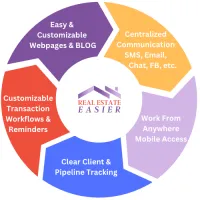
All Your Real Estate Tools And Systems In One Place


© 2026 Real Estate Easier LLC - All Rights Reserved.