
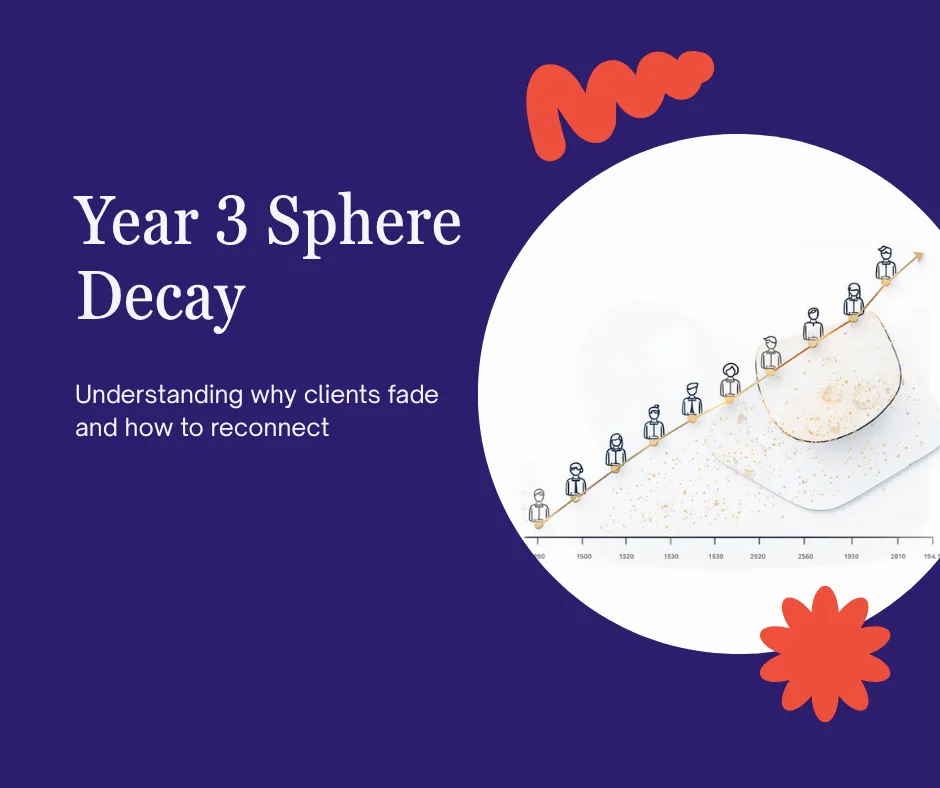
Why Agents Lose Their Sphere in Year 3 (and How to Get Them Back)
You closed the deal. The client moved in, you handed over the keys, sent the closing gift, and dropped them into the "past clients" tab of your CRM. That was 18 months ago.
Last week they listed their house with a different agent.
The Year 3 Sphere Decay
This is the most predictable failure pattern in real estate. It happens to nearly every producing agent on roughly the same timeline. Year 1 of a relationship: high touch, fresh memory, the client refers you to one or two friends. Year 2: a few touchpoints, maybe a holiday card, the client still recommends you when asked. Year 3: silence. The client moves, refinances, or sells — and someone else gets the call.
It isn't because the relationship soured. It's because the relationship went unmaintained. Your former client doesn't remember you didn't reach out; they remember they never heard from you. By the time they need an agent again, they've encountered four other agents on Instagram, two on a closing-cost calculator search, one at a kid's birthday party, and one through a referral from a coworker. You're not the default anymore — you're a memory.
Why this happens to even disciplined agents
Agents know they should stay in touch. Most genuinely intend to. The failure isn't laziness — it's volume. By year 3 of producing, an agent has 50–150+ past clients across multiple cohorts. Mental tracking falls apart at about 30. Beyond that, the human brain gives up trying to remember birthdays, anniversaries, neighborhoods, kids' names, and life stage transitions across that many people. The list goes from a sphere to a phone book.
The agents who beat the Year 3 decay don't have better memories. They have systems that remember for them.
What recovery actually looks like
The good news: most of these relationships are recoverable. Past clients who used a different agent the second time still feel a connection to you — they often used the other agent because the other agent was there, not because they preferred them. The fix is structural.
- Segment by recency, not just transaction date — last interaction date matters more than closing date. A client you texted 4 months ago is in a different bucket than a client you haven't reached since their closing 3 years ago. Most CRMs treat them identically; that's a mistake.
- Re-enter the conversation specifically, not generically — the worst thing you can do for a dormant client is send them a generic newsletter. The right move is a personal-feeling touch: their home value update, a market shift specific to their neighborhood, a referral question that requires a real reply. The goal is a conversation, not an impression.
- Automate the next touch — not the relationship — once the conversation is restarted, the system takes over. Birthday touch, home anniversary, market update tailored to their zip, just-listed alerts in their neighborhood. The CRM does the remembering; you do the relating.
Why generic CRMs fail at this
Most real-estate CRMs ship with rigid pipelines and one-size-fits-all automation that doesn't bend to how you actually work. They send the same anniversary email to a single buyer in a downtown condo and a couple with three kids in a 4,000-square-foot suburban Colonial. The clients notice — generic content reads as generic outreach. The system fails the relationship.
Real Estate Easier was built specifically for this problem. Three things make it work:
- Full customization — automations, fields, segments, content all match how you actually segment your sphere. Your downtown buyer gets condo-relevant content; your suburban family gets school-district market updates. The system speaks like you would speak to each segment.
- Customizable AI — your sphere outreach AI is configured to your voice and your market. It nurtures dormant clients, surfaces re-engagement signals, and brings the conversation back to you when a past client is showing renewed activity (refinance research, neighborhood searches, listing-portal visits).
- Mobile-first execution — re-engagement happens between meetings, in your driveway, between showings. The mobile app means a touchpoint that takes 30 seconds happens in 30 seconds, not after you sit down at a desk you're never sitting at.
The math on Year 3 recovery
Even a 40% recovery rate on dormant past clients adds material GCI year over year. Most agents leave that recovery on the table because rebuilding the discipline from scratch is hard. Real Estate Easier does it as a system — paired with coaching that rebuilds the habits to match.
If you're looking at your past-client list and recognizing the Year 3 decay pattern: you're not late. The relationship is still there. The system is what's missing. See how it actually works.
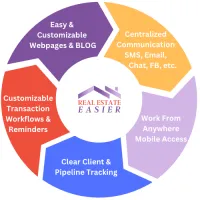
All Your Real Estate Tools And Systems In One Place


© 2026 Real Estate Easier LLC - All Rights Reserved.